


This is the next article in The Psychology of a Business Decision series. For additional context, you can view the introduction here.
At StratThink, our foundational perspective on business environments originates from our co-founder, Patrick Norton, who highlights a common scenario he calls the Permanent Growth Environment. It consists of five elements:
Capitalism- our collective belief in private property and the expectations of returns from ownership
Shareholder Primacy- the prioritization of shareholder return over other stakeholder and business strategy considerations
Human Nature- the pressure to secure our own positions and stability
Corporate Political Structure- the natural impact of having a small number of people selecting and retaining the highest levels of company leadership
Time Pressure- the quarterly demand for maximum growth
So, when thinking of the Psychology of a Business Decision, this environment sets the stage for the trickle-down process that occurs with business decisions.
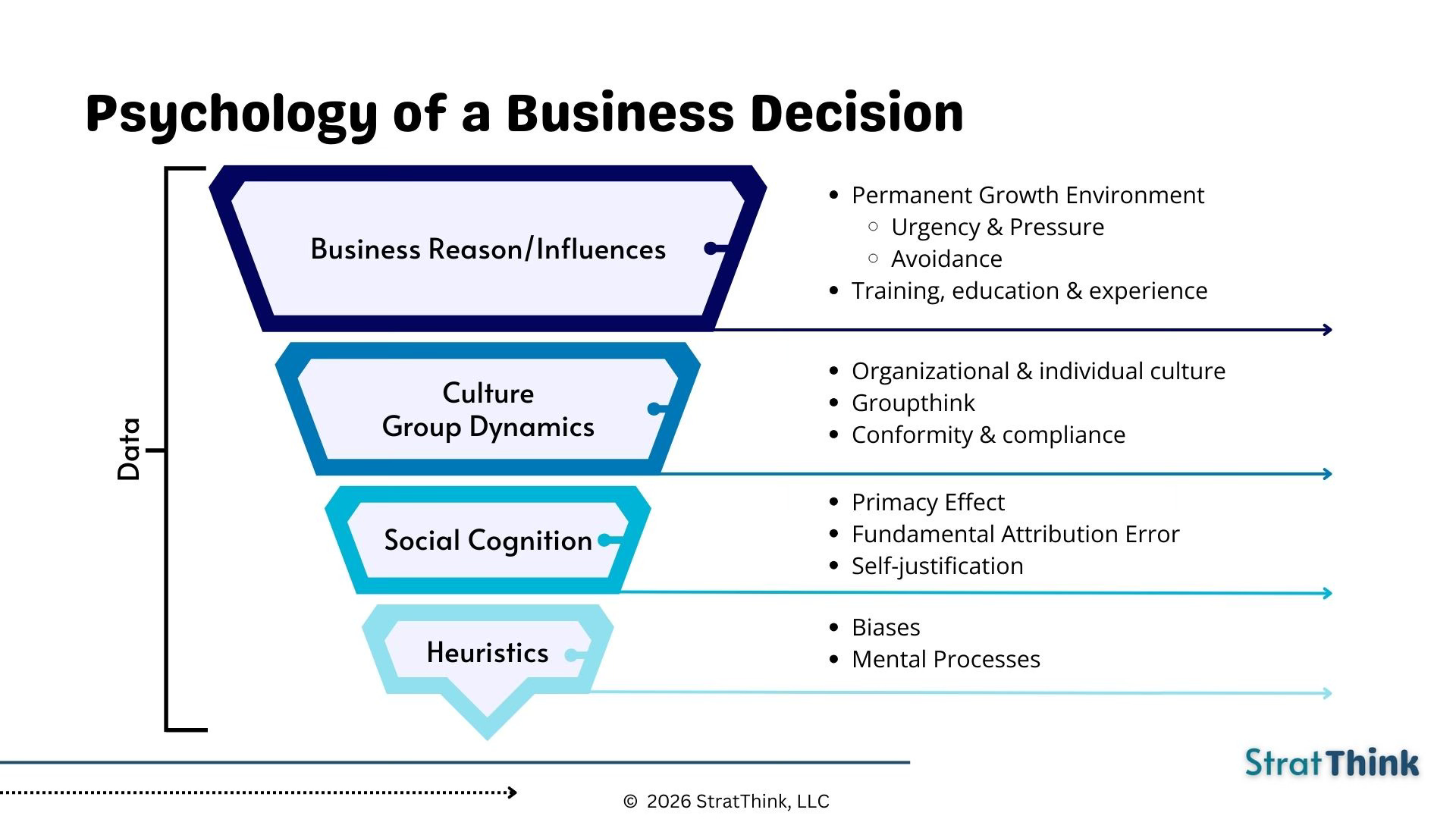
Per Patrick, “This collection of elements sits in the background while we mull over strategic options for our company, and pushes us to suboptimal decisions and results.”
Business decisions are a marriage of external and internal dynamics. The external environment primes and conditions the internal process.
Usually, the internal process is uncoupled from the external dynamics when someone has objectivity - like they’re new to the company or a consultant/vendor. This allows them to, potentially, be more perceptive to true company dynamics (before they get inundated with the respective business goals and organizational culture).
In general, urgency, pressure, and avoidance is just, sigh, so terrible for effective decision making. If you could feel, what my husband calls, the defeatstration (which is simultaneously feeling both defeated and frustrated) in the previous sentence, then that is correct.
It’s remarkable to me that so much of the business world seemingly runs on urgency, pressure, and avoidance. Urgency to do…anything and everything! And then pressure to be urgent about what you’re doing! But MOST IMPORTANTLY avoiding anything that might get in the way of urgently, almost frantically, pursuing profit.
Operational issues? AVOID THEM. Even though we’re frantically sending Slacks at 2AM to fix the operational issues that could have been avoided by…addressing the operational issues.
Board meeting? URGENTLY GIVE ME EVERYTHING! Everything that we’re working on, that’s new and shiny, snippets from what clients said, I will slather this pig in lipstick so the board doesn’t know any better.
Competitor released a new service/product? WE MUST RELEASE SOMETHING NEW, NOW! Doesn’t matter if we haven’t done the proper research, doesn’t matter if it doesn’t fit in with our current strategy (which, by the way, do we even have a true strategy??), doesn’t matter if it’s going to cost the company loads of money and labor to frantically Frankenstein an offering together. We. Must. Do. It. Now.
But the thing that’s crazy about this mindset is it creates so many more issues than it solves. But, I don’t think some organizations care.
There’s this weird influence hanging out in the shadows of business culture where organizations, seemingly, no longer want to provide a quality product or service. They want to provide a good-enough product or service that will continue to feed the company revenue. This lack of caring is a direct outcome of the Permanent Growth Environment and a lovely concept known as “enshittification.”
So, what can we do to hedge against this?
Here’s what we think:
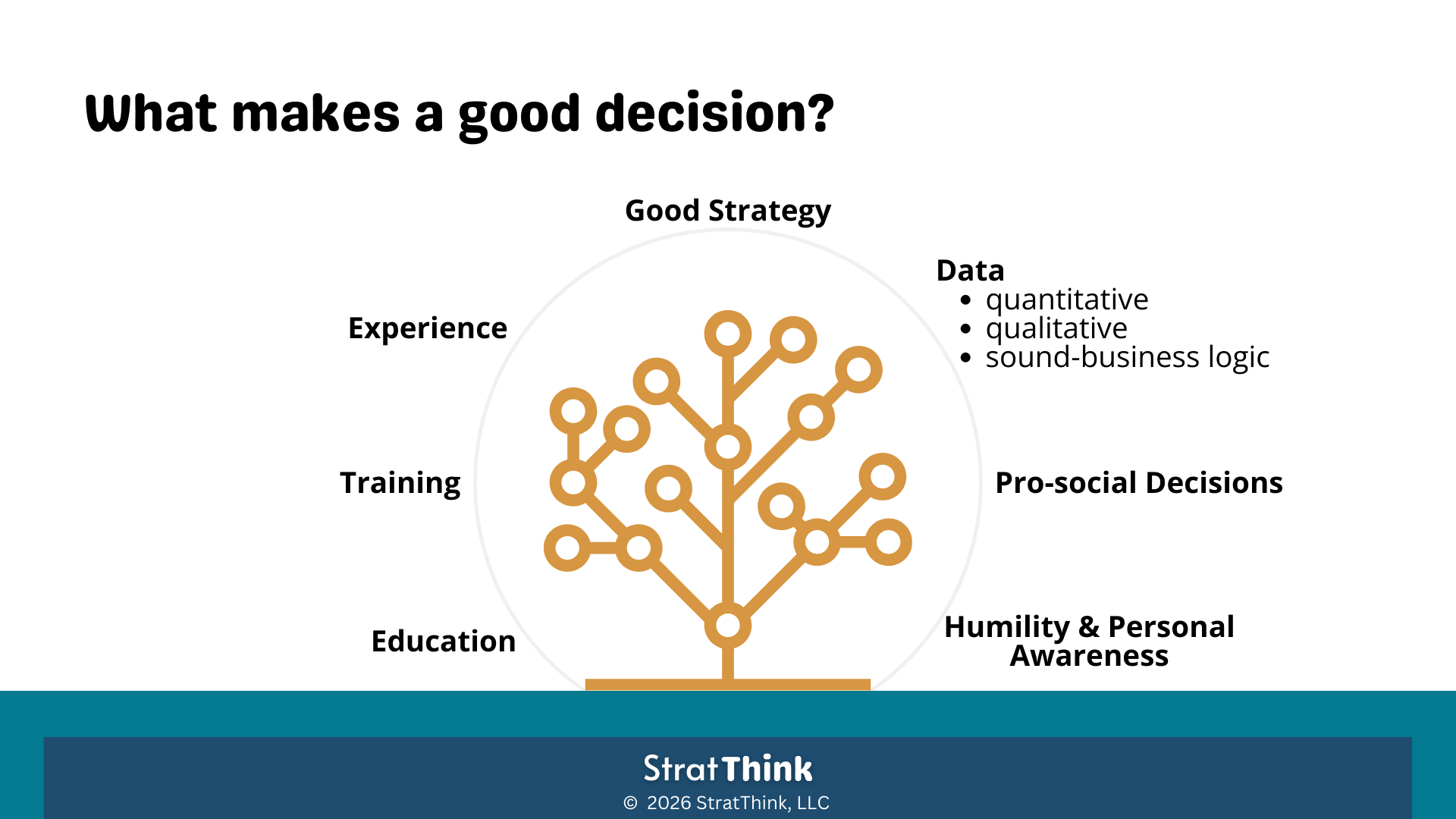
Maintain awareness of these influences
Create a true growth strategy
Strengthen decision-making skills (via self-awareness and self-growth)
Train, educate, and upskill employees
In general, we think making a good decision looks like this:
The reality is, we live with the Permanent Growth Environment - it’s probably not going anywhere for a long time. So, it’s up to us as leaders, managers, employees, and people to educate ourselves as to what it is and how it impacts our day-to-day experiences, specifically how it impacts our decision-making.
For the next article in this series, we’ll dive into culture and group dynamics, which is more my topic and specialty (since it’s Organizational Psychology), and I will have a lot more to say about that. Subscribe so you don’t miss out!